The positive macroeconomic environment and outlook for the Indian economy has attracted a lot of attention, particularly from large foreign investors like the Norwegian Sovereign Wealth Fund and Canada’s Pension Plan Investment Board. However, monetising this opportunity has largely been derived from sophisticated and well-informed investors. This has been primarily due to lack of awareness and information on India for most of the global investing community.The other requirement has been obtaining a Foreign Portfolio Investor (FPI) license to trade onshore Indian securities. This report attempts to familiarise Australian and NZ investors on the local equity markets in India: Breadth and depth of India’s equity markets; Historical performance; Key drivers of the Indian equity market; and Select corporate India success stories While most global investors look at India from a top down perspective, its true worth is not appreciated unless abottom up, fundamental approach is taken. This has been the optimal way for significant wealth creation. Click Here To Download The Research Paper

Archive for 2017
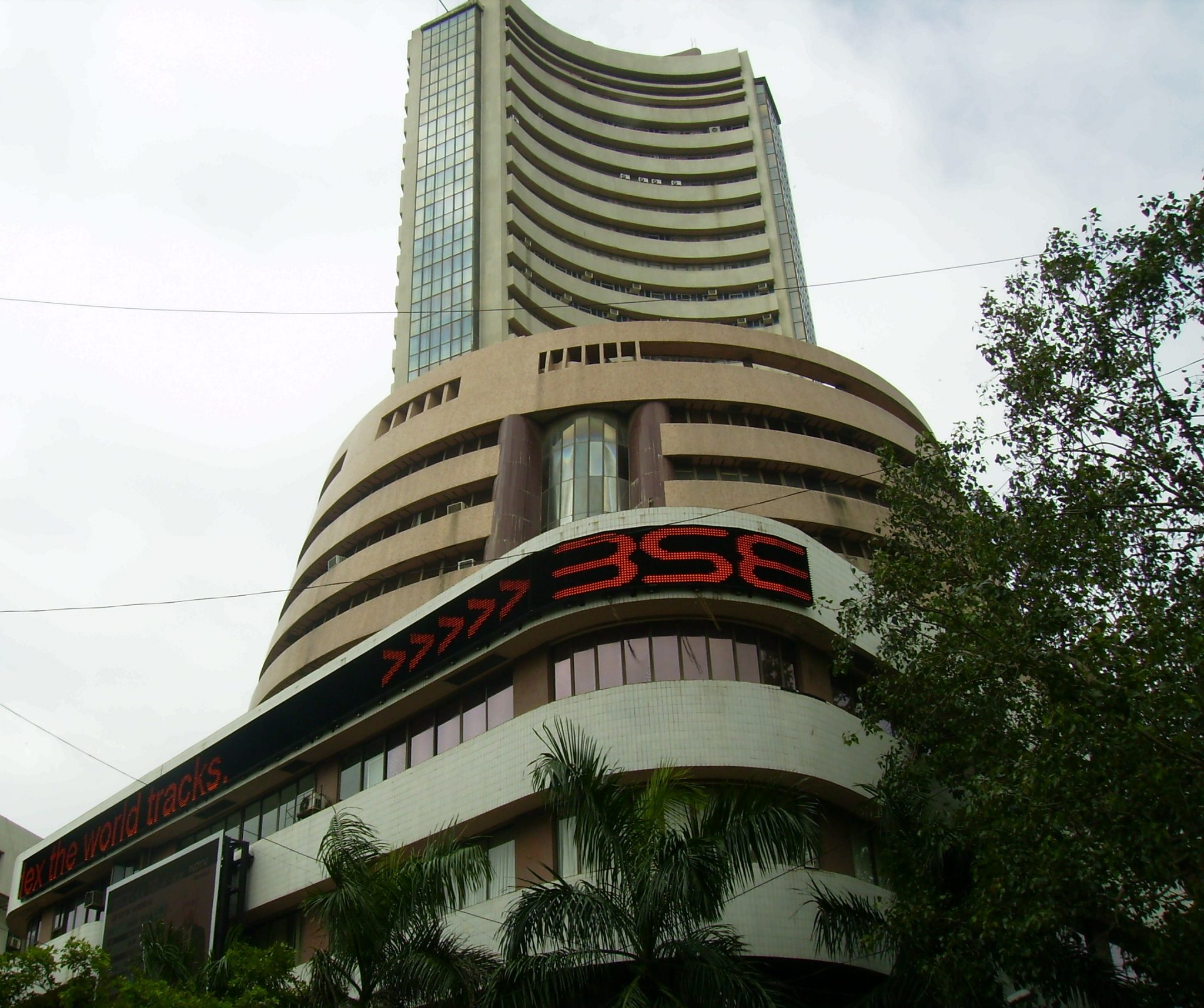

How Spicy is Your Portfolio
- admin
- February 3, 2017
- 0 Comments
Exposure to true growth investments is becoming scarce in today’s world. This makes wealth creation and meeting portfolio objectives that more challenging. We believe exposure to selective growth investments in an investment portfolio will become increasingly critical as these allocations drive the bulk of the returns going forward. Therefore, we encourage Australian and NZ investors to rethink their current portfolio by adding some spice to it. Click Here To Download The Research Note
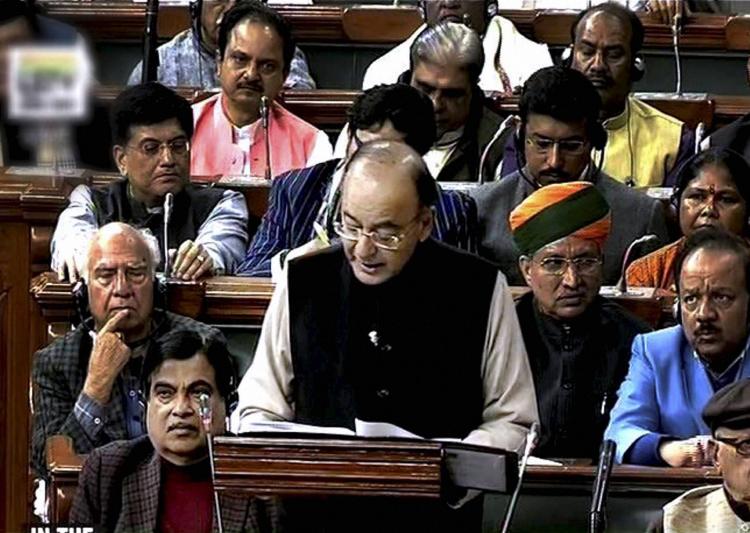
India Budget 2017-18: Many Firsts, A Move in the Direction of Transformed, Energised and Clean India
- admin
- February 2, 2017
- 0 Comments
India Budget 2017-18 contained many firsts. This was the first time the budget was presented on 1st February as compared to the conventional practise of presenting it on the last day of February, enabling Ministries to operationalise all activities from the commencement of the financial year. Second, the practise of presenting separate Railway budget was done away with and was merged with the general budget to bring Railways to the centre stage of Government’s Fiscal Policy and thirdly the complex and confusing classification of plan and non-plan expenditure was removed to facilitate a holistic view of allocations to different sectors and ministries. India’s Finance Minister Arun Jaitley’s (FM) agenda for 2017-18 has been to transform the quality of governance and quality of life in India, energize the youth to unleash their true potential and clean the country from the evils of corruption, black money and non-transparent political funding. To achieve this, the FM announced a series of measures, including: Increased spend in rural, agricultural and allied sectors (Allocation of AU$37.5 bn, up 24% YoY), Enhanced thrust on infrastructure build (AU$80 bn spend, up 25%), Learning outcome based skill building programs for youths, A thrust on the digital economy to rein in on the menace of corruption and A new path breaking clean direction for political funding in India. The FM has tried to achieve the above, while observing fiscal prudence and maintaining a lower market borrowing of AU$70 bn as against last year AU$85 bn. The fiscal deficit for 2017-18 is targeted at 3.2% of GDP with the government being committed to achieving 3% in the following year. Some of the key budget proposals are listed below. KEY BUDGET PROPOSALS: Agri & Rural ThrustProvided for record agricultural credit of AU$200 bn, increasing coverage of crop insurance and doubled the corpus of irrigation development fund to AU$8 bnIncreased Rural Employment Guarantee (MNREGA) allocation from AU$7.7 bn to AU$9.6 bnIncreased rural housing allocation from AU$3 bn to AU$4.6 bn for building 10 mn houses for poor Infrastructure Push Planned AU$26 bn (up 8%) of Capital and development expenditure by Indian Railways for modernising and upgrading its network, of which AU$11 bn will be provided as budgetary supportIncreased budgetary allocation for construction of highways from AU$11.5 bn to AU$13 bnInfrastructure status to affordable housing Relief to Foreign InvestorsBoost to Foreign investments by abolishing the Foreign Investment Promotion Board (FIPB)Concessional withholding rate of 5% charged on interest earnings by foreign entities on Indian bonds and government securities extended to 30.06.2017Foreign Portfolio Investors (FPI) category I & II exempted from indirect transfer provisions. Other Significant ProposalsSteps to increase digital transactions including a proposal to mandate all government receipts through digital means beyond a prescribed date and ban on cash transactions above AU$6,000.Political funding above AU$40 to be received only through digital mode, cheque or the newly proposed electoral bondsAllowable provision for non-performing assets (NPA) of banks increased from 7.5% to 8.5% and interest will now be taxed only on the actual receipt instead of accrual basis.Holding period for computing long-term capital gain on real estate reduced from 3 to 2 years and base year for indexation shifted from 1.4.1981 to 1.4.2001Reduced tax rate to 25% (earlier 30%) for companies with annual turnover of upto AU$10 mnPersonal income tax relief of 5% provided to lowest tax bracket (AU$ 5,000 to 10,000) of individual assesses and 10% surcharge imposed on higher tax bracket assesses between AU$100,000 and AU$200,000.No major changes in indirect taxes, ahead of GST rollout OUR VIEW: The budget strives a balance between government spend to accelerate growth (in the backdrop of the slowdown due to demonetisation) and fiscal prudence, while providing a roadmap to a transformed and clean India. Consumption driven growth has been provided a push by infusing a reasonable amount of allocations into rural India. The rural thrust in the budget though was quite pragmatic in its approach and was not populist to appease the voters in five election bound states, as was widely expected. The lower tax rates at the bottom of the pyramid should help provide a boost to consumption demand. Lower taxes on mid and small size companies should improve the health of these sector, which was severely impacted due to the economic slowdown as well as demonetisation. This should also increase the employment in the sector and provide a boost to consumption. The thrust on infrastructure will provide the necessary investment driven boost to the economy enabling it to grow comfortably in the range of 6.75% to 7.50% envisaged in the economic survey published a day prior to the budget. Doing away with bureaucratic hurdles like the FIPB and clarity on FPI taxation provides comfort that the government is serious about improving ease of doing business in India. The budget did take cognizance of the fact that Tax to GDP ratio is very low. Of the 37 million individuals filling tax only 2.4 million individuals show income of above AU$20,000, contrasting this data, over 3 million cars get sold annually in India and over 20 million individuals travelled overseas either on business or vacation. This implies that India is largely a tax non-compliant society. The government is planning to use the data availed from the demonetisation exercise to increase the tax base. Tax compliance will also be sought by reducing the level of cash transactions in the economy and adoption of digital modes of payment. Benefits arising of demonetisation and increased tax base will reduce the fiscal burden and at some stage will also enable the government to roll out further developmental and social security schemes like universal basic income scheme talked in the economic survey. For now, though the FM had to be contained with a 3.2% fiscal deficit as compared to the planned fiscal deficit of 3.0% fro FY2017-18 in last year’s budget. This increase in fiscal deficit though may not be viewed negatively, as it is on account of increased capital expenditure and amalgamation of the Indian Railways. The introduction of electoral bonds and

Is swapping volatility risk for longevity risk the right investment strategy?
- admin
- January 15, 2017
- 0 Comments
Many Australian investors steer clear of investing in shares of companies listed in emerging, or frontier markets, because they think they are too volatile. Generally, investor psychology leads to considering these investments in isolation rather than considering the role they play in a portfolio, because investors mistakenly perceive risk as volatility. As Warren Buffett once noted, “an asset that has dropped very sharply becomes “riskier” at the lower price paid than it was at the higher price”. In our view, volatility is more a proxy for fear which often leads to irrational investor behaviour because higher volatility and short-term monitoring due to a loss aversion bias can lead investors to sell at the wrong time. Risk management in investor portfolios should consider the risk of: Not meeting investor goals (e.g. generating real wealth, managing liabilities etc.); Outliving retirement savings; and, Permanent loss of capital (as opposed to capital losses on paper). Sequencing risk is topical given its impact on retiree portfolios. However, concerns around sequencing risk tend to drive portfolio construction towards risk minimisation strategies, giving potentially a more stable portfolio, but perhaps unknowingly increasing longevity risk (out living savings). Investment strategies aligned to capital growth should not be ignored. Doing so exposes investors to the risk of falling short of their investment objectives and, in particular for retirees, outliving their savings. Drew, Walk & West (2015) looked at longevity risk and its impact on retiree portfolios. The authors note that there is around a 50% chance that a 65-year-old Australian male will live to the age of 85, a 30% chance he will live to age 90 and a 12% chance he will live to age 95. Similarly, there is a 50% chance a 65-year-old Australian female will live to age 87, a 41% chance she will live to the age 90 and a 21% chance she will live to age 95. Remarkably, for a couple both aged 65, there is a 50% chance that at least one will live until age 91 and a 31% chance at least one will live to age 95. It is worth noting that these statistics do not take account of future longevity gains. If future longevity gains are similar to those observed for the past century or so, retirement planning based on the probabilities listed here could significantly underestimate longevity risk. Imagine an average life expectancy of 100 in 20 years’ time. Source: The Role of Asset Allocation in Navigating the Retirement Risk Zone, FINSIA, 2015 Source: The Role of Asset Allocation in Navigating the Retirement Risk Zone, FINSIA, 2015 Longevity risk presents a major challenge for those developing asset allocation strategies. Can wealth be sustained for longer periods? This risk can have a major impact, especially when retirees face the prospect of running out of savings when it’s too late to take any action. The Association of Superannuation Funds of Australia (ASFA) estimates that an Australian retiree needs an income of A$40,297 per year to provide a comfortable standard of living in retirement¹. Given the full rate age pension is currently just over $18,000 per year for a single pensioner, the risk of shortfall is meaningful. Therefore, it is important retirees not ignore investment strategies that can generate sustainable, long-term capital growth over ever increasing investment horizons. Are Australian equities the answer? Interestingly, many investors have been using equities as a proxy yield play. This seems to work fine until valuations on these stocks are bid up and the risk of capital loss increases. However, a company that is paying out a significant component of its profit as dividends is doing so because of Australia’s favourable taxation laws (franking) and a dearth of growth opportunities in which to invest capital. Perhaps companies should increase their focus on capex and generate investment and productivity, rather than focus on rewarding shareholders through income. It seems we have forgotten that investing in equities is about generating capital growth through exposure to businesses that can grow their revenue and therefore create strong profitability. Can broad emerging markets give you that capital growth? “Emerging markets” is an eclectic group of countries bucketed together by an index but which share very little in common. The term embraces countries that are big and small, developed and under-developed, industrialised and agrarian, manufacturing and commodity-based, rich and poor, deficit and surplus – the diversity goes on. Hence, it pays to be selective when identifying capital growth opportunities. Companies operating within India’s economic ecosystem are experiencing strong revenue growth, with payout ratios of only 26% and dividend yields of 1.4%. This is because the opportunity for companies to generate strong returns from reinvesting their capital is significant, given an abundance of growth opportunities. In fact, Indian companies have grown their return on equity rather consistently compared to other developed and emerging countries, as shown in Figure 2. MSCI Index Std Dev of EPS growth since 2002 Avg ROE growthsince 1996 India 13% 18% China 19% 13% Brazil 44% 13% Russia 45% 13% Emerging markets 27% 13% All Country World Index 34% 12% US 33% 15% Developed markets 35% 12% Source: Morgan Stanley research Investors need to re-examine the role of equities in their portfolio. The focus should not always be on short-term volatility of each asset, but rather the growth and diversification offered to the portfolio. An allocation towards growth/developing economies like India is likely to help address longevity risk and complement high yielding strategies. Endnotes1. ASFA Retirement Standard, March quarter 2012 Click Here To Read The Article On Portfolio Construction Forum